
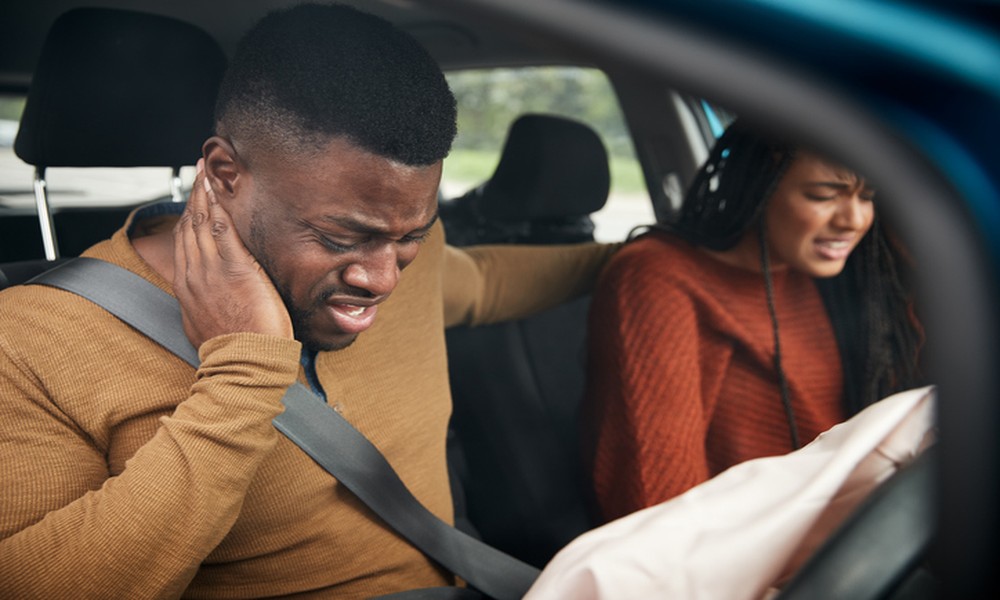
You were in the passenger seat. Your friend was driving. Now you’re hurt, the medical bills are showing up, and the idea of filing a claim feels like a betrayal of someone who probably feels terrible already. Most injured passengers who call Attorney Dustin in this situation lead with the same line: “I don’t want to sue my friend.”
You probably won’t have to. The way California auto insurance actually works, a passenger injury claim almost never touches your friend’s bank account. It lands with their insurance carrier, which is the entire reason they pay premiums every month.
You Are Not Suing Your Friend, You Are Making a Claim Against a Policy
Liability auto insurance exists for moments exactly like this. When you file a personal injury claim as an injured passenger, you are pursuing the policy, not the policyholder. The carrier handles the investigation, the negotiation, and any settlement check. Your friend’s job is usually limited to giving a statement and forwarding paperwork.
In most cases, the friend never writes a check, never sets foot in a courtroom, and never sees a personal asset touched. Premiums may rise, the way they would after any at-fault accident, but that is a separate issue from your medical recovery.
If the carrier refuses to negotiate fairly and a lawsuit becomes necessary, the named defendant on the caption is technically the driver. The defense lawyer, the strategy, and any payout still come from the insurance company. That distinction matters, and most people don’t learn it until they sit across from an attorney.
Whose Insurance Pays When You Are a Passenger
This is where California rules get specific, and where injured passengers commonly leave money on the table. Several layers of coverage can apply:
- The driver’s bodily injury liability coverage. If your friend caused the wreck, this pays your medical bills, lost wages, and pain and suffering up to the policy limit. California’s minimum liability limits rose to $30,000 per person and $60,000 per accident on January 1, 2025, under Senate Bill 1107. Many drivers carry well above the minimum.
- Another driver’s liability coverage. If a different driver caused the crash, the claim runs through that driver’s policy, not your friend’s.
- Medical payments coverage on the friend’s policy. MedPay pays medical bills regardless of fault, typically $1,000 to $10,000, with no deductible and no waiting for liability to be sorted out.
- Uninsured and underinsured motorist coverage. If the at-fault driver has no insurance or not enough, UM and UIM coverage step in. This can sit on the friend’s policy or, in many cases, your own auto policy, since UM coverage often follows the person rather than the vehicle.
- Your own health insurance. It pays providers in the meantime and may need to be reimbursed from any settlement through a process called subrogation.
A passenger with a serious injury can sometimes recover from two or three of these sources stacked together. Identifying which policies apply, in what order, and how to preserve them is the work that actually moves the value of a claim.
What California Law Says About Fault and Recovery
California uses a pure comparative negligence rule. As an injured passenger, you almost certainly carry no fault for the collision itself. You weren’t steering, weren’t choosing the route, weren’t deciding to run the yellow. That removes the defense insurers rely on most often.
Carriers will still try angles. The ones that show up regularly in adjuster letters:
- You knew your friend had been drinking and rode anyway
- You were not wearing a seatbelt
- You distracted the driver
The seatbelt defense has real teeth in California under the Franklin v. Gibson line of cases and can reduce damages tied to injuries that a belt would have prevented. The other arguments rarely succeed on clean facts, but they appear early as leverage to suppress the offer.
The statute of limitations for personal injury in California is two years from the date of the accident under Code of Civil Procedure section 335.1. If a public entity vehicle was involved, a government claim has to be filed within six months. Miss either deadline and the case is over before it starts.
How a Passenger Claim Actually Moves
A typical passenger case unfolds in roughly this order:
- Medical treatment is documented from day one. Gaps in treatment are the single most common reason adjusters discount a case.
- All applicable carriers are put on notice in writing, with communications routed through counsel rather than directly to you.
- Once you reach maximum medical improvement, a demand package goes out with records, bills, lost wage documentation, and a legal argument grounded in California law.
- Negotiation. Most cases settle at this stage. If they don’t, suit is filed before the two-year deadline runs.
The friendship piece usually resolves itself. Once your friend understands that you are pursuing the policy they bought specifically for moments like this, the conversation tends to shift from awkward to practical. Some friends are relieved. The bills get paid, you get back on your feet, and nothing personal changes hands.
Talk to Attorney Dustin Before You Talk to the Adjuster
Adjusters often call injured passengers within days, sometimes hours. They are pleasant, they sound helpful, and they are gathering material to minimize the claim. Before giving any recorded statement or signing any release, get a lawyer’s read on the policies involved and what the case is realistically worth.
A passenger claim handled correctly should account for current medical expenses, future care, lost income, diminished earning capacity, and pain and suffering. Attorney Dustin offers free consultations for these cases, and there is no fee unless compensation is recovered for you. Bring whatever paperwork you have, a copy of the police report if it has been released, and the names of any insurance companies that have contacted you so far. The friendship survives. The claim moves forward. Both can be true at the same time.