
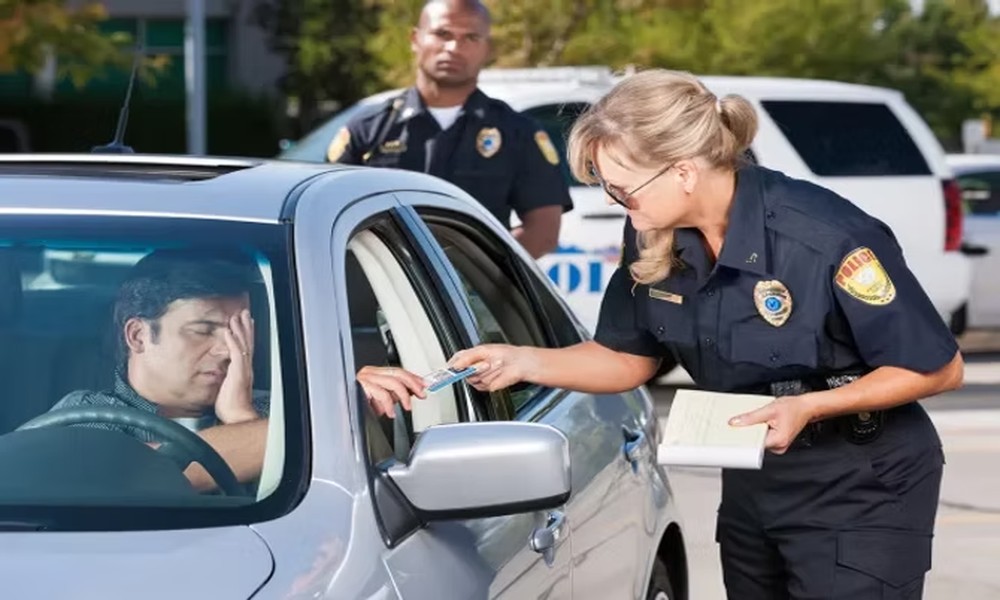
The stretch of Interstate 10 running through Calcasieu Parish is one of the most heavily patrolled highway corridors in the Gulf South. State troopers, sheriff’s deputies, and federal task force agents work it constantly, watching for narcotics moving east toward New Orleans or west toward Houston. What you do in the first few minutes of an I-10 stop can determine whether a routine ticket becomes a felony drug case. Colonna Law Firm handles these stops regularly in Lake Charles, and the same avoidable mistakes keep showing up in the file.
Why I-10 Through Lake Charles Sees So Many Drug Stops
Interstate 10 is a designated drug interdiction corridor. Officers are trained in indicators they use to justify extending a stop or asking for a search: out-of-state plates from source or destination cities, rental cars, air fresheners, single occupants on long trips, drivers who seem nervous, inconsistent travel stories. None of those things are illegal. They become the building blocks of what officers later describe as “reasonable suspicion” if the stop escalates.
The stop itself almost always begins with a real but minor violation: a lane change without a turn signal, a license plate light out, following too closely, a brief drift onto the fog line. The U.S. Supreme Court held in Whren v. United States that the officer’s underlying motive does not invalidate the stop if the stated reason is legitimate. The pretextual stop is constitutional, and it is where everything else begins.
What an Officer Can and Cannot Do
The scope of a traffic stop is limited to its original purpose: checking the license, registration, and insurance, running warrants, and writing the citation. Under Rodriguez v. United States (2015), officers cannot extend the stop beyond that scope to investigate unrelated matters unless they develop independent reasonable suspicion. Questions about your travel plans and what is in the car are common, but a stop that drags on while officers wait for a K-9 may already be unlawful.
A few practical points worth holding onto:
- You must provide your license, registration, and insurance. You do not have to answer questions about where you have been, where you are going, or what is in the car.
- Keep your hands visible. Tell the officer before reaching for anything.
- If the questioning seems to go past the citation, ask, “Officer, am I being detained, or am I free to go?” That puts the legal status of the encounter on the record.
The Consent Question Most Drivers Get Wrong
The most consequential moment in many I-10 stops is when the officer asks, “Mind if I take a look in your car?” Saying yes gives the officer authority to search every container and compartment in the vehicle. The Fourth Amendment would otherwise require probable cause.
You can decline. A clear, polite statement works: “Officer, I do not consent to any searches.” That does not give the officer probable cause, and it does not extend the stop. It preserves your Fourth Amendment rights. The officer may still proceed if there is an independent legal basis like the smell of marijuana or plain-view contraband, but consent and probable cause are separate questions, and only one of them is in your control.
Consent vs. Probable Cause
Consent is voluntary permission. Probable cause is a legal standard requiring specific, articulable facts that contraband is in the vehicle. An officer with probable cause does not need your consent. An officer without probable cause needs it. Officers ask because they often do not have probable cause yet, and a yes converts the encounter into a search they could not otherwise conduct.
When a Drug Dog Shows Up
A K-9 sniff of the outside of a vehicle during a lawful traffic stop is not a search under Illinois v. Caballes, but Rodriguez makes clear that officers cannot extend the stop to wait for a dog without independent reasonable suspicion. Timing matters. If a dog is run around the car while the citation is still being written, that is usually permissible. If the citation stalls for fifteen extra minutes waiting for a dog, the timeline becomes evidence in a motion to suppress. A positive alert from a trained, certified dog generally provides probable cause to search.
If You Are Searched or Arrested Anyway
Do not interfere or argue at the roadside. The place to fight an unlawful search is in court, not on the shoulder of the interstate. After the stop, write down everything you remember: exact times, the trooper’s name and badge number, the unit number, the location, what was said, when the dog arrived, when the search began. Body and dashcam footage will be the most important evidence in the case, and your independent recollection helps your attorney target the right portions during discovery.
Do not give a statement to law enforcement before talking to a lawyer. Saying “I want to speak with my attorney” ends the questioning.
How Colonna Law Firm Approaches I-10 Drug Cases
The strongest defense in many I-10 cases is procedural. A motion to suppress under the Fourth Amendment and La. C.Cr.P. Article 703 can produce a dismissal when the stop was unlawfully extended, when consent was coerced or never given, when a dog sniff was used to manufacture probable cause, or when a search exceeded its scope. Colonna Law Firm works through dashcam and body cam footage frame by frame, compares the officer’s report against the real timeline, and files the motion in the 14th Judicial District Court when the facts support it. A successful suppression typically ends the case.
If you were stopped on I-10 in Calcasieu Parish and charged with a drug offense, do not assume the case is hopeless. Call Colonna Law Firm for a free consultation, bring whatever paperwork was handed to you, and let an attorney compare what actually happened against what should have.